
German Naturalization: New 5-Year Pathway Guide
Learn about the updated German naturalization requirements, including the new 5-year residency path, language standards, and the naturalization test.
By aimmigration Research Team
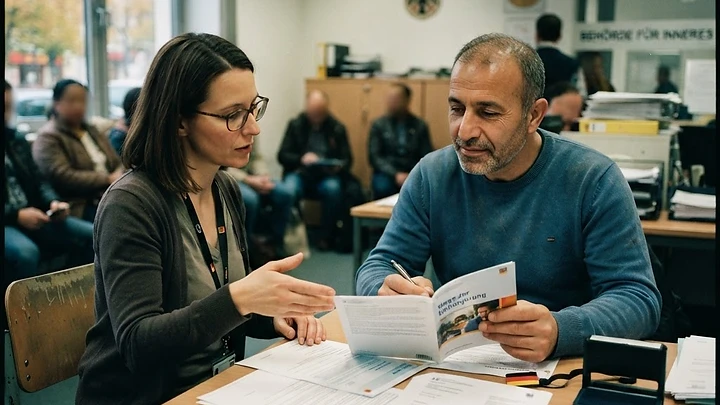
German Naturalization: New 5-Year Pathway Guide
Becoming a German citizen is a significant milestone for many expatriates. Following major legislative reforms in June 2024, the path to naturalization has become more accessible, reflecting Germany's commitment to integrating long-term residents. This guide outlines the current German citizenship requirements and the steps involved in the process.
Disclaimer: This article is for informational purposes only and does not constitute legal advice.
Understanding the 5-Year Residency Rule
As of June 2024, the standard residency requirement for naturalization has been reduced from eight years to five years of lawful, habitual residence in Germany [5, 8]. This change is designed to reward integration and provide a clearer timeline for those building their lives in the country.
Accelerated Pathways
For those with strong ties to Germany, the timeline can be even shorter. Spouses or registered civil partners of German citizens may be eligible for naturalization after just three years of legal residence [1, 5, 9]. To qualify for this accelerated path, the marriage or partnership must have been valid in Germany for at least two years [1, 9].
| Pathway | Residency Requirement | Special Criteria | |---|---|---| | Standard | 5 Years | B1 Language, Financial Independence | | Accelerated (Spouses) | 3 Years | 2+ Years Marriage/Partnership | | Exceptional Integration | 3 Years | Exceptional language/professional skills |
Core German Citizenship Requirements
Beyond the residency duration, applicants must meet several fundamental criteria to be eligible for naturalization:
- Secure Residence Status: You must hold a qualifying residence permit that allows for a long-term stay [2]. Certain temporary permits, such as those for students or vocational training, do not count toward the residency requirement [8].
- Financial Self-Sufficiency: Applicants are generally expected to support themselves and their dependents without relying on social welfare benefits.
- Language Proficiency: You must demonstrate sufficient German language skills, typically at the B1 level of the Common European Framework of Reference for Languages (CEFR) [2, 4].
- Clean Criminal Record: A commitment to the free democratic basic order of the German Basic Law is required, and applicants must not have a significant criminal history.
- Dual Citizenship: Germany now broadly permits multiple nationality [2, 4]. You are no longer required to renounce your previous citizenship to become a German citizen [2].
Naturalization Application Process
The Naturalization Test (Einbürgerungstest)
Proving your knowledge of Germany’s legal system, society, and culture is a mandatory step for most applicants [3, 6]. This is typically achieved by passing the "Life in Germany" (Leben in Deutschland) test [2, 5].
Test Structure and Preparation
- Format: The test consists of 33 multiple-choice questions [2, 3].
- Passing Score: You must answer at least 17 questions correctly within the 60-minute time limit [2, 3, 6].
- Content: Questions cover topics such as democratic values, equal rights, freedom of religion, and German history [3].
- Preparation: The questions are drawn from a public catalogue of approximately 300 questions, making it highly "crammable" for those who study consistently [2].
Exemptions
Not everyone is required to take the test. You may be exempt if you:
- Hold a German school-leaving certificate or university degree [3, 6, 7].
- Have completed an integration course that included the "Life in Germany" test [6, 7].
- Are unable to take the test due to age, illness, or disability.
- Entered Germany as a guest worker or contract worker on or before specific historical dates [3].
Conclusion
The path to German citizenship is now more streamlined than ever. By focusing on achieving B1 language proficiency early and preparing for the naturalization test, you can navigate the application process with confidence. Always ensure your documentation is complete and consult the official local citizenship authority (Einbürgerungsbehörde) for guidance specific to your region.
Frequently Asked Questions (FAQ)
1. Do I have to give up my current passport?
No. Since the June 2024 reforms, Germany allows dual citizenship, meaning you can retain your original nationality alongside your new German passport [2, 4].
2. How long does the naturalization test take to prepare for?
Most applicants find that with consistent study of the official 300-question catalogue, they can pass the test within a few weeks [2].
3. What if I don't have a B1 language certificate?
B1 proficiency is a standard requirement [2, 4]. If you do not have a certificate, you should enroll in an accredited language course as soon as possible, as this is often the most time-consuming part of the process [2].
4. Can I apply if I am on a student visa?
Generally, no. Time spent in Germany on specific temporary residence permits, such as those for students or vocational training, does not count toward the five-year residency requirement [8].
Rate this article
Related Articles
UAE Golden Visa: Entrepreneur Business Plan Criteria
Learn the essential business plan criteria for the UAE Golden Visa entrepreneur track and how to structure your proposal for official evaluation.
US EB-5 Investor Visa: Processing Time and Milestones
Explore the expected timeline and administrative stages of the US EB-5 investor visa process, from filing the initial petition to conditional permanent residence.